
The Subjectivity of Lameness and How Technology Brings Clarity
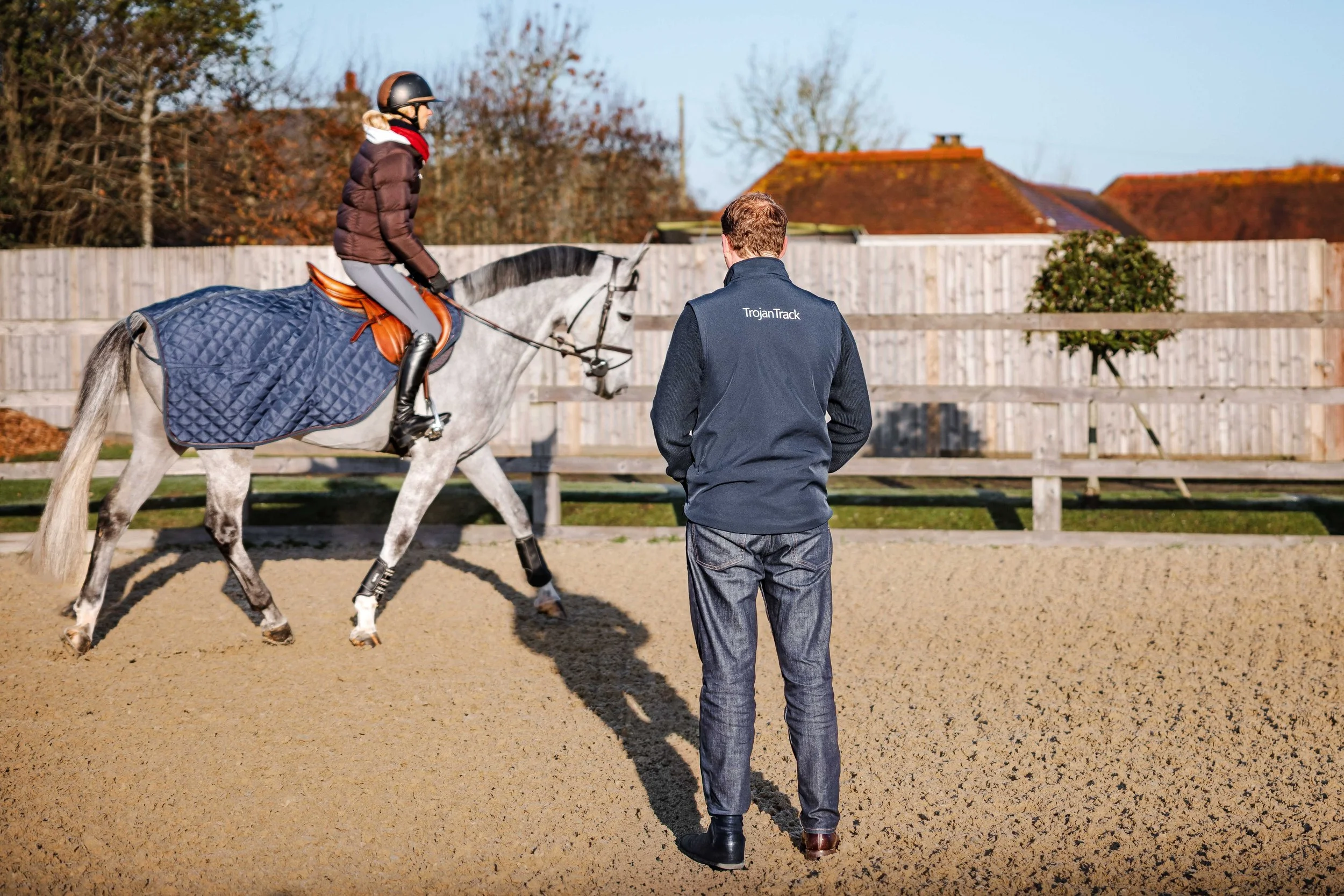
Lameness, an irregularity or pain-related change in a horse’s gait, is notoriously difficult to assess consistently. What one rider dismisses as mere “stiffness” might be judged as clear lameness by another observer. Indeed, veterinary surgeons, trainers, owners and riders often hold differing perceptions when watching the same horse move.
Such discrepancies are not just anecdotal: research shows that human observation of equine lameness is highly subjective, especially in subtle cases. This subjectivity can have serious implications. Lameness is among the most common and costly health issues in horses, affecting equine welfare, performance and economics. If early signs of lameness go undetected or are misinterpreted as something trivial, minor injuries can worsen into major problems. In this article, we explore why lameness assessment varies so much between people, and how emerging technologies promise to bring much-needed consistency and clarity to detecting lameness, reducing the risk of missed or misread symptoms.
The Human Factor: Subjectivity in Lameness Detection
Evaluating lameness has traditionally relied on the trained human eye, a process as much art as science. Even with standardised grading scales (such as the 0–5 scale from the American Association of Equine Practitioners, which is also used by the British Veterinary Association), detecting a mild limp can be hit or miss.
Studies have repeatedly shown that agreement between observers is low for mild lameness (grades 1–2 out of 5). One landmark study had 86 equine veterinary surgeons score videos of horses trotting; the results revealed poor inter-rater agreement (overall Fleiss kappa ~0.31) and especially poor consistency for hindlimb lameness (kappa only ~0.11). In plain terms, different vets often did not concur on whether or which hind leg was lame in subtle cases. This aligns with everyday experience: a slight head bob or shortened stride might catch one expert’s eye but escape another’s notice.
Crucially, the level of experience plays a role, but does not eliminate disagreement. Less experienced observers (such as veterinary students or recent graduates) struggle more with identifying the affected limb. Inexperienced riders may find it “very difficult” to tell if a horse’s uneven movement is due to pain or just poor gait, and owners are often unable to recognise lameness in their own horses at all. However, even seasoned veterinary surgeons can disagree on subtle lameness: in mild cases, even experts frequently lack consensus on which leg is the culprit.
Part of the problem is the lack of a universal protocol or consistent focal points. One vet might focus on head nods, another on hip hike, and each might use slightly different cues. In fact, researchers using eye-tracking have found that during a lameness examination on a circle, expert vets vary widely in where they look and which gait indicators they prioritise, leading to unsystematic and individual approaches. Even terminology can differ; what one practitioner calls a “head bob” might mean a subtle upward motion to one person and a downward dip to another.
Human bias and the limits of perception further muddy the waters. Expectation bias can subconsciously influence what an observer sees. If an owner believes their horse is fine, they may overlook slight irregularities, whereas a worried rider might overstate a problem. The resolution of the human eye is another limiting factor. A horse’s trot happens quickly, and asymmetries can be minute (a difference of just a few millimetres in movement). The naked eye, even a skilled one, has limited ability to detect such small differences in real time, especially without slow motion. All these factors mean that assessing lameness by eye is inherently subjective and prone to disagreement. As one veterinary review dryly noted, in visual examinations “there can be poor agreement among evaluators even about the same animal’s lameness”.
Importantly, certain scenarios exacerbate the subjective variance. Hindlimb lameness is particularly tricky to spot, as indicated earlier, because compensatory mechanics can mask or mimic the signs. Lungeing a horse in a circle, a common step in lameness examinations, can accentuate lameness but also introduces complexity; experts in one study showed no consistent strategy when evaluating horses on the circle, unlike the straighter trot where they agreed to look at head and pelvis first. Observers tended to focus on the front of the horse and interpreted what they saw differently. Conditions like soft ground or subtle bilateral lameness (lameness in both left and right legs) can fool the observer, as the horse might not exhibit a dramatic head nod. One person’s “just a bit off today” could indeed be lameness that another detects only with a more sceptical eye.
All of this highlights why one rider’s “stiffness” might be another rider’s “lameness”. Our human lens is variable. While skilled horsepeople develop a feel for when a horse is not quite right, even top professionals can miss early lameness or argue over its severity. This variability has prompted a strong call in the equine world: we need more objective ways to assess gait irregularities, to support rather than replace human judgment with consistent data.
Why Consistency Matters: Risks of Missed or Misinterpreted Lameness
The consequences of relying solely on subjective observation can be significant. Lameness is not just a performance issue, it is fundamentally a welfare concern. Pain-related gait changes, if overlooked, mean a horse may continue training or competing while hurt, potentially worsening an injury. As one veterinary publication pointed out, early and reliable lameness detection is “a fundamental aim in veterinary medicine” because catching problems early vastly improves the prospect of recovery.
A minor lameness identified and treated promptly might resolve in days, whereas if it is missed (perhaps written off as “just a bit of cold-backed stiffness” by an optimistic owner) it could escalate into a serious injury requiring months of rest. Consistency in detection can therefore mean the difference between a short setback and a career-ending breakdown for a horse.
Studies illustrate how often early signs are missed. In a field survey of “owner-sound” horses, meaning horses their owners believed were sound, researchers found that a majority actually showed measurable lameness or gait asymmetry when examined closely. In that study, 235 riding horses presumed healthy were evaluated; vets graded 55% of them as at least moderately lame (score ≥ 2/5) in one or more limbs. When a subset underwent objective gait analysis on a treadmill, the results were even more striking: 57% of the horses had significant movement asymmetry in head or pelvic motion, and 58% showed weight-bearing imbalances between left and right limbs.
In several horses that had been scored as only mildly lame (grade 1/5 or less by the vet’s eye), the objective measurements still detected clear asymmetries beyond normal thresholds. In other words, even very subtle, sub-clinical lameness, the kind easily dismissed in a routine check, was revealed by quantitative analysis. This kind of discrepancy highlights how human observers, including experienced ones, can under-detect issues that an unbiased measurement will catch.
Such misses have knock-on effects. A horse that is moving unevenly due to a brewing hock or stifle issue might just seem “lazy” or resistant to a rider, leading the rider to push it harder or use training tools when the horse is actually in pain. Misinterpretation of lameness as a behavioural problem is a common risk when observation is unclear. Conversely, misidentifying the wrong limb as lame (not uncommon when lameness is subtle or complex) can lead to treating the wrong area, subjecting the horse to nerve blocks or medications it did not need, while the real issue festers.
Researchers have noted that successful diagnosis and treatment hinges on correctly pinpointing the lame limb; when veterinary surgeons disagree on which leg is affected, it undermines the whole diagnostic process. High variation in assessments can thus translate to delayed or incorrect therapy, prolonging the horse’s discomfort and the owner’s expenses.
Economically, the stakes are also high. Lameness has been identified as the leading cause of lost training days and veterinary costs in many equine disciplines. A U.S. study estimated that lameness issues cost owners over $1 billion annually in vet bills and lost use. In the UK, roughly one-third of horses in regular work have some degree of lameness issue each year. Every missed diagnosis is a missed opportunity to intervene earlier and more cheaply. Clearly, improving consistency and objectivity in lameness detection is not just an academic exercise, it is vital for horse welfare and can save significant time and money.
Technology to the Rescue: Objective, Data-Driven Detection
Modern technology is increasingly stepping in to support the human eye in lameness evaluations. Over the past decade, a range of objective gait analysis tools have been developed and are becoming more accessible in equine practice. These tools aim to provide consistent, quantitative data on a horse’s movement, removing some of the guesswork and variability inherent in visual assessment.
One category of such tools uses inertial sensors attached to the horse. Small, wireless accelerometers and gyroscopes can be placed on the horse’s body, commonly one on the poll, one on the pelvis and one on a limb, to measure the symmetry of motion as the horse trots. The best-known system of this kind, often referred to generically as a “lameness locator”, analyses the vertical displacement of the head and pelvis over multiple strides. If one forelimb is painful, the horse will instinctively lift its head slightly more when that limb bears weight. The sensors capture this head toss and similarly subtle changes in pelvic movement for hindlimb issues.
Studies have validated that such inertial sensor systems are highly sensitive to small asymmetries, even those invisible to the naked eye, and can reliably identify which limb is lame. For instance, research using experimentally induced mild lameness, such as a tiny hoof wedge or a temporary nerve block, showed that these sensors detected gait changes that experienced clinicians struggled to see. Notably, objective sensor data often aligns well with gold-standard force plate measurements and can confirm the examiner’s hunch, or sometimes reveal a lameness the person did not spot.
Wearable inertial sensor kits have been a game-changer for vets because they introduce consistency: the same horse trotted before and after a flexion test can be compared numerically rather than relying on memory or video replay. However, these systems do have practical drawbacks. They require attaching devices to the horse, which takes time and can be error-prone if a sensor slips out of position. There is a financial cost for the equipment, and some horses resent the tape or straps used to mount the sensors. Because of these hurdles, sensor systems, while valuable, are not yet commonplace at every yard. This is where a new wave of technology is emerging: AI-driven video analysis that needs nothing more than a smartphone camera.
Recent advances in computer vision and artificial intelligence have enabled markerless motion tracking of horses. Instead of putting sensors or reflective markers on the animal, high-speed video can be analysed by AI algorithms to track the horse’s own body landmarks as it moves. These systems use deep learning to identify key points, such as the head, ears, withers, hips and fetlocks, frame by frame in a video of a horse trotting. By tracking these points, the software can measure parameters like stride length, joint angles and vertical displacement of the torso, essentially performing a gait analysis similar to the sensor approach but without any attachments.
One such AI motion tracking system, developed in Sweden (commercially known as Sleip), was shown to detect asymmetries in horses on different surfaces and in different directions. In a 2024 comparative study, this AI system was tested head-to-head against a traditional inertial sensor kit on a group of horses. The findings were encouraging: the AI detected more subtle asymmetries, flagging a greater number of limbs as “off” than the sensor did, suggesting higher sensitivity. It showed especially strong agreement with the sensor on straightforward scenarios like forelimb lameness trotting in a straight line. More complex cases, such as hindlimb unevenness on a soft surface, remained challenging. Even the AI struggled there, mirroring the limitations of human eyes and sensors alike. Nonetheless, the ability to simply film the horse and let a trained algorithm analyse the gait opens up huge possibilities for routine, objective monitoring.
Marker-based gait analysis in a controlled environment can detect asymmetries too subtle for the human eye. Modern AI-driven systems aim to achieve similar objective measurements using just video, without the need for physical sensors.
Perhaps the most exciting aspect of video-based gait analysis is its accessibility. Almost every horse owner or vet has a smartphone or tablet with a high-quality camera. By democratising the tools, requiring only a video of the horse trotting, AI gait analysis can bring objective lameness detection out of the laboratory and into the field. No cumbersome equipment or specialist operator is needed; as one developer put it, “just your smartphone camera” can capture the data, and within minutes an AI can deliver a full movement report.
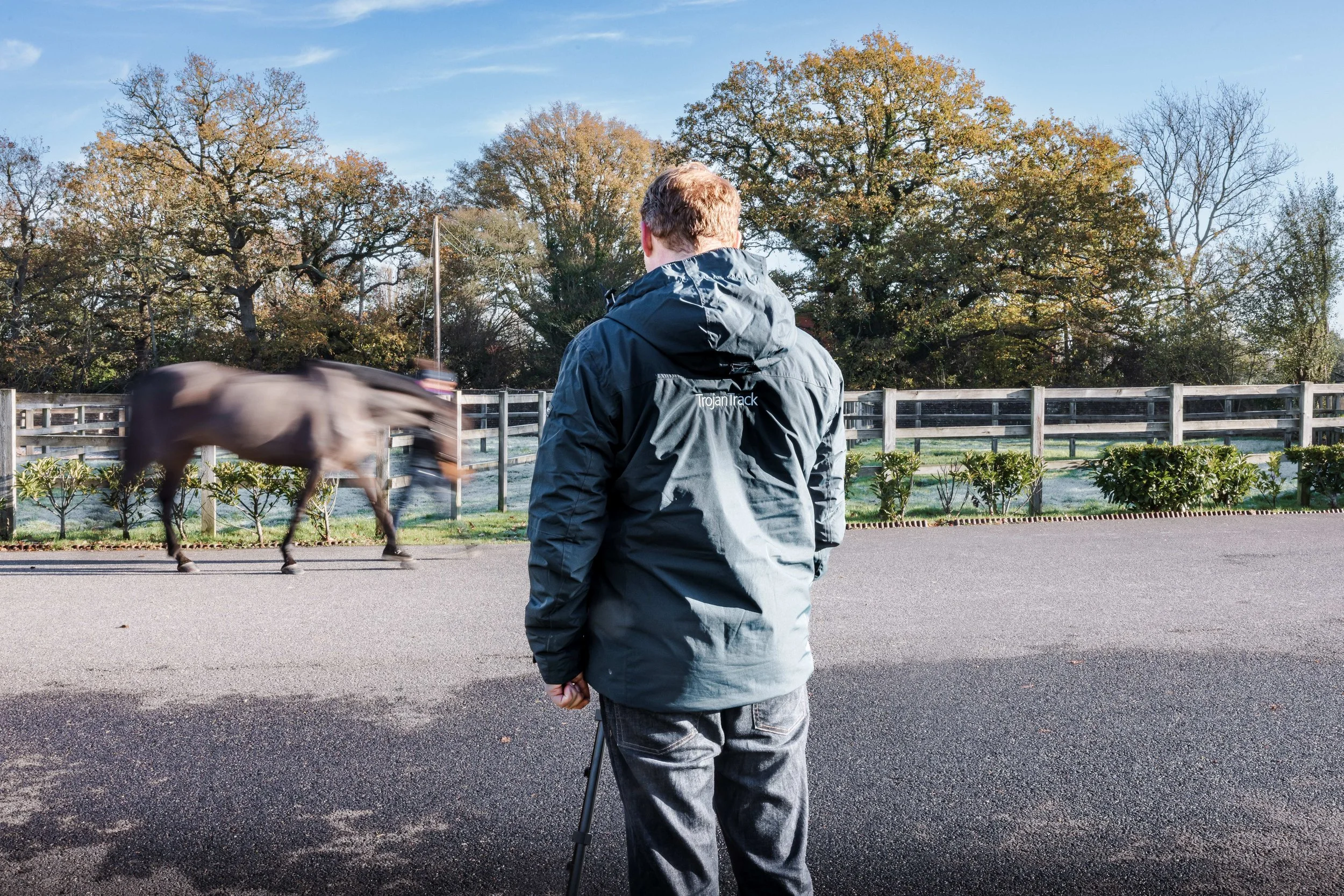
For example, the Irish start-up TrojanTrack is building a smartphone app that tracks 52 key points on a horse’s body from a simple walk or trot video, providing a detailed biomechanical analysis with stride lengths, stance times and symmetry metrics, all without any wearables or markers. This system, developed from veterinary research, is designed to spot the early signs of lameness that might otherwise be written off as minor stiffness. According to its developers, the real-time analysis can give trainers and vets early warnings of potential issues, enabling intervention before injuries escalate, ultimately improving welfare and reducing veterinary costs by catching problems sooner.
In practice, an owner could take a 10-second video of their horse trotting each week and establish a baseline. The AI might detect a gradual change in symmetry over time that a human would not notice until the horse became overtly lame. Armed with that data, the owner can call in their vet for a check-up before a small strain turns into a serious injury.
From veterinary pharmaceutical firms and clinics to insurance companies, there is growing interest in incorporating AI-powered gait analysis. This underscores the important role that objective lameness detection will play in the future of equine care. The promise of technologies like TrojanTrack lies in their objectivity and consistency. An algorithm is not influenced by barn chatter (“he always steps short on that leg when it is chilly”) or by how valuable the horse is. It simply measures what it sees, in the same way every time, and provides data-driven insight.
Of course, AI tools are not infallible. Poor video quality, bad lighting or an uncooperative horse can all affect results. Early studies of AI pose-estimation systems for lameness note that very dark coats or bright sunlight can confuse the software’s tracking of reference points. However, the technology is rapidly improving, and with each advancement the process becomes more robust. Even in its early forms, AI gait analysis has shown it can differentiate a sound horse from a lame one and even localise which limb is affected in many cases. As datasets grow and the algorithms learn from more examples of subtle lameness, their accuracy and usefulness will only increase.
A New Era of Clarity in Lameness Detection
We are on the cusp of a significant change in how lameness is evaluated, one where subjective judgements are supported by objective data. The goal is not to remove the human element, as the experienced horseperson’s eye and intuition remain invaluable, but rather to augment it with technology that can confirm suspicions or reveal issues that would otherwise go unnoticed. By combining the rider’s or vet’s qualitative assessment with quantitative analysis, we get the best of both worlds: the context and insight from human observation, and the consistency and precision of measurements.
Importantly, these advances benefit all stakeholders, from veterinary surgeons to trainers, owners and riders. Veterinary surgeons gain a more reliable tool to monitor treatment progress or to communicate findings to owners with hard numbers and charts. A trainer or rider can use objective gait data to adjust a horse’s regimen, perhaps detecting that a horse is asymmetrically pushing off in one hind leg before it even limps. Owners gain peace of mind that a hunch, such as “he is not moving quite right today”, can be checked against an impartial metric, reducing doubt and second-guessing.
Over time, widespread use of objective lameness detection can build a large database of “movement health” records, useful for everything from improving training techniques to informing breeding decisions, as soundness is, to some degree, a heritable trait.
The push for objectivity is rooted in the need for consistency and clarity. When everyone, vet, owner, rider and trainer, is looking at the same data printout or app readout, there is far less room for disagreement over whether a horse is lame or just “having an off day”. It moves the conversation from “I think I see it” versus “I do not see it” to “the data indicates a 20% difference in left-fore versus right-fore loading”. That consistency can streamline decision-making, for example by uniformly defining what counts as significant lameness. Is a head bob of 5 mm enough to call the horse lame, or 10 mm? An agreed objective threshold can be set, taking out personal bias.
Equally, technology brings clarity by revealing patterns invisible to humans. A 2025 study, for example, applied AI video analysis to horses during a three-day eventing competition. The system tracked each horse at the initial jog-up and again after the cross-country phase, detecting subtle changes such as a slightly shorter forelimb swing and increased time on each hoof (duty factor) after the strenuous cross-country. These quantifiable changes, identified in minutes for nearly 200 horses, would be impossible for judges or vets to systematically note by eye in such a busy setting. Yet they provide insights into how exertion affects gait and could flag horses that might need extra rest or examination. The AI in that study proved capable of quickly and repeatably measuring gait parameters without specialised equipment. This points towards a future where routine surveillance of horse locomotion, whether at competitions, sales or back home on the yard, could catch problems earlier than ever.
The Bigger Picture
The age-old challenge of subjective lameness evaluation is being met with innovative solutions. What used to be regarded as an almost mystical skill, relying on the “eye of the master” and a bit of luck, is becoming a more exact science backed by artificial intelligence and biomechanical data. By injecting objectivity into lameness detection, we reduce the risk of missed or misinterpreted signs of injury. A slight stiffness that one might have shrugged off can now be correlated with concrete data, prompting a proactive approach rather than a reactive one.
As the horse world embraces these technologies, we move towards a more consistent, transparent way of caring for our equine athletes. Subjectivity will always play a part, and the educated eye is still crucial, but with AI-driven clarity, we can ensure that no limp goes unnoticed and no concern is dismissed without analysis. In the end, this fusion of human and machine insight means healthier, happier horses and more confident decision-making for all who love and work with them. The once elusive lameness that “depends on who is looking” can finally be pinned down in black and white, or rather in data points and graphs, bringing new consistency to the care of the horses in our charge.
Sources:
Serra Bragança, F.M., et al. (2020). Adaptation strategies of horses with induced forelimb lameness walking. Equine Veterinary Journal.
Starke, S.D. (2022). Expert visual assessment strategies for equine lameness examinations in a straight line. Veterinary Record.
Bragança, F.M., et al. (2022). Equine Gait Analysis: Translating Science into Practice. MDPI Animals.
Uellendahl, K.E., et al. (2024). Vision-Based Equine Gait Classification Using a Convolutional Neural Network with Transfer Learning. Sensors.
Crecan, M., & Peștean, I.C. (2023). Vision-Based Detection of Equine Lameness Using Deep Learning Methods. Sensors.
British Equestrian Federation. (2024). State of the Nation Report.
LSU AgCenter. (2015). Economic Cost of Lameness.