
Bridging the Knowledge Gap: Empowering Riders Through Data and Awareness
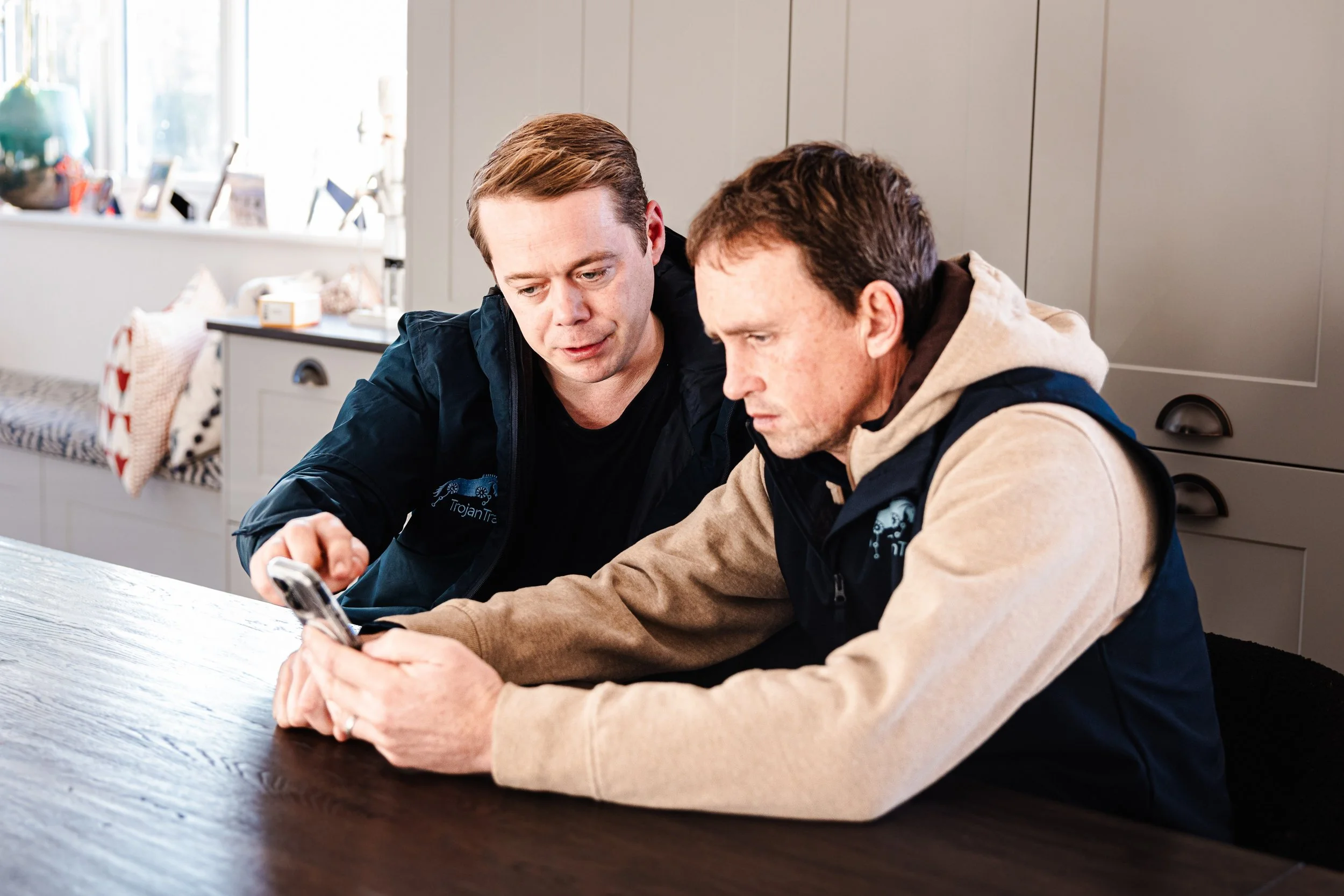
Trevor Breen and Ross discuss the data behind hi latest reports
In the world of equestrian sport, tradition is both a source of pride and, increasingly, a point of critical reflection. For decades, riders, particularly those at the amateur level, have relied on intuition, handed-down wisdom and the visible signs of health to judge whether their horses are thriving. Often, that sense of connection has served both horse and rider well. But as scientific research into equine biomechanics and welfare advances, it is becoming clear that what feels sufficient may not always be enough. The quiet accumulation of minor asymmetries, overlooked fatigue, or subtle shifts in gait can, over time, lead to chronic issues. Yet because these changes are gradual and rarely dramatic, they are often accepted, or worse, internalised as “just how my horse moves”.
Today, we stand at a turning point where technology and tradition need not compete. Instead, they can complement each other. For riders of all levels, especially those who care deeply about their horses’ wellbeing, embracing a more data-informed awareness could be one of the most impactful decisions they make.
Challenging What We Think We Know
A recent study into equestrian culture explored why certain training and management practices persist despite long-standing concerns about welfare. Researchers found that many riders expressed genuine concern for their horses while simultaneously justifying potentially harmful routines. The phrase “but my horse is well cared for” was emblematic of a common pattern, a form of cognitive dissonance in which riders hold conflicting beliefs but reduce internal discomfort by reframing or minimising the more uncomfortable truths. Some viewed excessive stall time as acceptable because the horse seemed content. Others justified the absence of turnout or the use of restrictive tack by pointing to the demands of performance.
This disconnect is rarely driven by malice. More often, it is the product of cultural norms, shaped by enculturation, that begins when riders are introduced to horses at a young age. Practices absorbed from trusted mentors become deeply embedded, often without challenge. But the research makes one thing clear. Good intentions do not necessarily equate to good outcomes, especially when the tools now available allow us to spot risk factors long before they escalate into problems.
The Hidden Cost of Imbalance and Asymmetry
Among the most pervasive issues affecting both performance and welfare is asymmetry. Whether it shows as a mild favouring of one rein, a slight unevenness in stride, or recurring soreness after certain movements, these imbalances are easy to overlook when relying on the naked eye. Yet their long-term effects can be significant. Studies of sport horses have shown that even those assessed by experienced riders and trainers as moving soundly often display quantifiable gait asymmetries when analysed with objective methods.
This issue is not solely about overt lameness. Rather, it concerns the gradual build-up of mechanical stress, muscular compensation and postural strain that the horse adapts to silently, until it eventually cannot. What may begin as a minor irregularity in hind limb loading, for example, can evolve into sacroiliac dysfunction or joint inflammation. Similarly, horses consistently schooled on firm ground or in repetitive lateral patterns without adequate balance work may develop stiffness or discomfort that subtly undermines both comfort and performance.
Riders often observe that a horse is “a bit stiff on one side” or “better to the right”. Without measuring the degree of that asymmetry, however, they are left guessing as to whether the issue is stable, worsening or improving. In some cases, perceived normalcy masks a chronic pattern of compensation. For example, an 8% asymmetry may be normal for one horse, but a consistent rise to 12–15% over multiple sessions can indicate early compensation long before obvious lameness appears. Just because a horse has always moved in a certain way does not mean it should.
Seeing the Unseen: Tools That Make a Difference
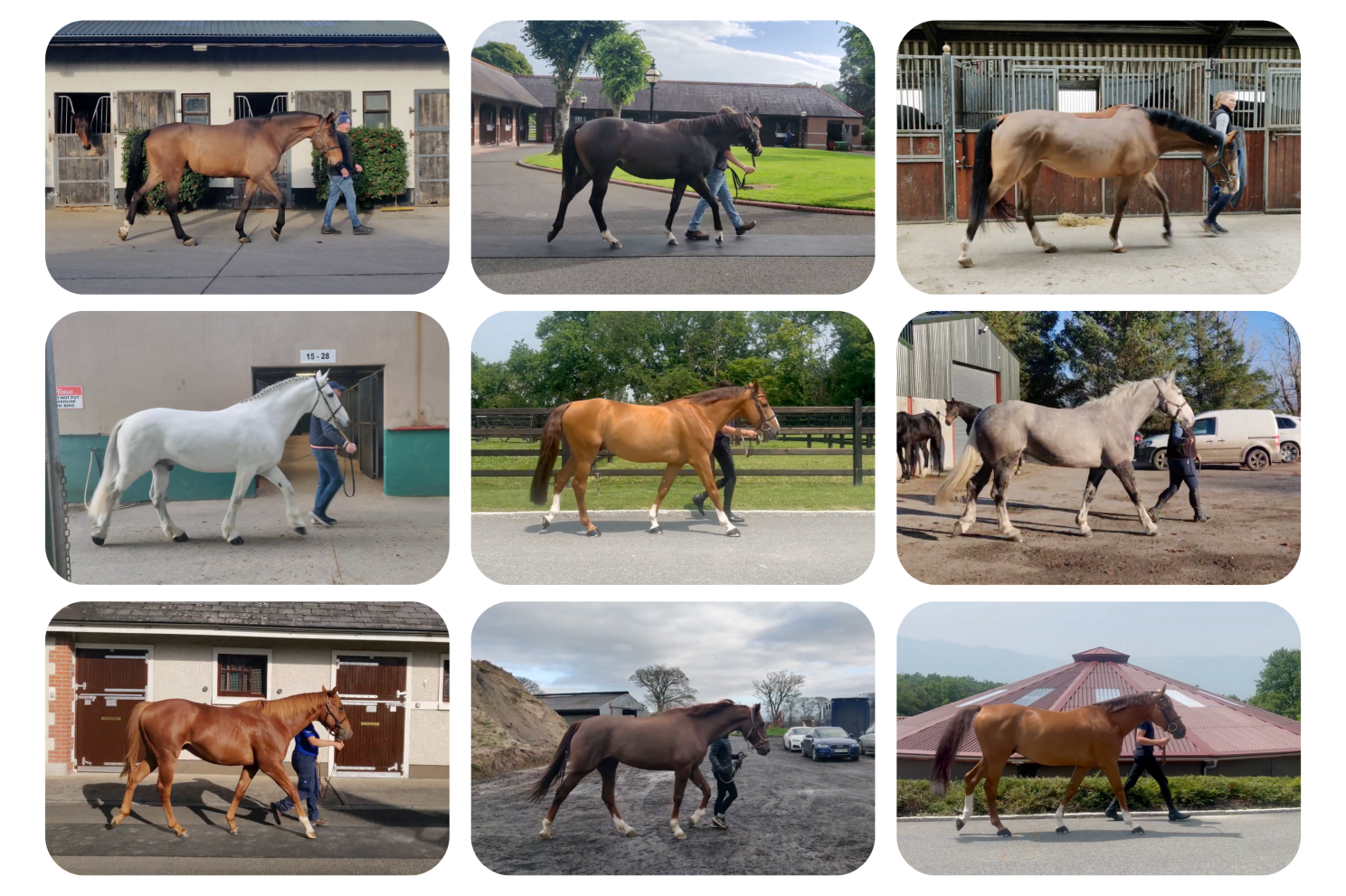
Until recently, objective data on movement and health was the preserve of elite riders and veterinary researchers. This is no longer the case. Advances in equine technology mean that riders at all levels can now use simple, non-invasive tools to gain meaningful insight into their horses’ biomechanics, workload and recovery. From wearable sensors that track stride regularity and rhythm to mobile apps that analyse movement from smartphone videos, access to these resources is now more widespread and affordable.
Monitoring a horse’s heart rate during and after exercise offers more than just an indication of fitness. When recorded consistently, heart rate trends can signal early fatigue, stress or inadequate recovery. Horses returning from injury or increasing their training workload may show elevated post-exercise heart rates or delayed recovery, even when they appear calm and sound. With this information, riders can make informed decisions about rest, intensity and progression.
Tracking symmetry across multiple training sessions can also alert riders to developing imbalances. A gradual increase in lateral deviation, or a consistent shortening of stride on one rein, may point to discomfort, muscular restriction or an ill-fitting saddle. The data does not provide a diagnosis. Rather, it raises better questions and ensures that decisions are guided by evidence, not guesswork.
A Culture of Care, Reframed
There is no shortage of passion among amateur riders. Many dedicate enormous time and resources to their horses, ensuring access to quality feed, routine farriery and regular veterinary care. Yet, as recent studies show, welfare is not solely about provision. It also concerns perception, empathy and the willingness to view the horse as a sentient individual rather than a performer.
One key finding in recent welfare research is that care is often framed in instrumental terms. Riders may value a “happy athlete” not purely for their wellbeing, but because such a horse is more likely to succeed. While this view is not inherently harmful, it does risk marginalising the horse’s lived experience. The implication is that care is justified only when it produces results.
Introducing data and monitoring into everyday riding practices encourages a shift in this mindset. It invites riders to view small changes not as threats to success, but as signals from the horse’s body. A slower recovery rate, or a subtle gait deviation, becomes a prompt for curiosity, not a disruption. By listening more closely, riders are empowered to make adjustments that protect the horse’s health and build trust.
From Instinct to Insight
The move toward data-informed horsemanship is not about displacing instinct. It is about refining it. No digital tool can replace the bond between horse and human. Nor should it try. But instinct alone is shaped by experience, expectations and habit. It can overlook the gradual shifts that only measurement reveals.
Data, by contrast, offers clarity and consistency. It does not forget last week’s stiffness or downplay a dip in recovery. It does not rationalise a change in behaviour as “just being fresh”. Instead, it adds another layer of understanding and provides a baseline against which change can be measured.
Importantly, integrating monitoring into routine work does not require a lab coat or a clinical approach. It begins with simple steps, such as filming transitions to observe straightness, noting how long it takes a horse’s heart rate to return to normal after canter work, or tracking how frequently one rein feels uneven. Over time, these insights form a picture that helps guide decisions and supports long-term soundness.
Bridging the Gap, Together
Equestrianism is built on deep traditions. But if those traditions are to continue serving horse and rider well, they must adapt to what we now understand about movement, stress and recovery. The reality is that many horses are managed and trained with enormous care, yet without the benefit of tools that could make that care even more effective.
Bridging the knowledge gap means challenging the belief that if a horse looks fine, everything must be fine. It means learning to recognise the early indicators of imbalance, questioning habits that may have gone unexamined, and using data not to control the horse, but to understand them more clearly.
At TrojanTrack, we believe that insight builds better partnerships. Data, when used thoughtfully, supports the rider’s judgement and enhances the horse’s welfare. It allows riders to respond early, to adapt wisely, and to plan confidently. And ultimately, it allows horses to thrive in work without sacrificing their long-term wellbeing.
Let us move beyond “he seems sound”. Let us work towards knowing, not guessing. The tools are here, and the responsibility is ours.
Sources
Cheung, E., Mills, D. and Ventura, B.A. (2025) ‘“But my horse is well cared for”: A qualitative exploration of cognitive dissonance and enculturation in equestrian attitudes toward performance horses and their welfare’, Animal Welfare, 34, e50, 1–13. Cambridge University Press.
Hardeman, A.M., Tijssen, M.A., Vos, R., Vernooij, J.C.M. and Back, W. (2024) ‘Quantification of movement asymmetry in equine sport horses considered sound by expert assessment’, Equine Veterinary Journal, early view.
König von Borstel, U., König, J., Fiedler, J. and Rohe, J. (2024) ‘Laterality in the domestic horse: a large-scale study of associations with horse-, management-, and training-related factors’, Animals, 14(4), 612.
Martin, J.H., Keegan, K.G., Phillips, R., Wilson, D.A. and Kramer, J. (2023) ‘Wearable inertial sensor-based systems for equine gait analysis: validation and clinical utility’, Journal of Equine Veterinary Science, 124, 104211.
Rhodin, M., Johnston, C., Roepstorff, L. and van Weeren, R. (2021) ‘Gait symmetry in horses: current knowledge, limitations and future directions’, The Veterinary Journal, 271, 105635.
Visser, E.K. and Waran, N. (2022) ‘Guardianship and the Five Domains: redefining equestrian care through welfare science’, FEI Equine Ethics and Wellbeing Commission Report, Fédération Equestre Internationale.
Wolframm, I., Lush, C., McBride, S. and Dyson, S. (2023) ‘Human attitudes as obstacles to improving equine welfare: a review of current challenges’, Equine Veterinary Education, 35(4), 206–213.