
USE CASE: Hock - Flags Prior to Joint Infection
Customer Story
The situation
This horse was competing at international level and returning to full work following a previous hock issue. The build-up back into training had been sensible and gradual, and on the surface everything looked fine. The horse was still training, still competing, and still keen to work.
During schooling, however, the horse would intermittently feel a bit off behind. Nothing dramatic. Nothing that would usually stop a session. The kind of horse that might just need to get going properly, something most riders would normally ride through, particularly at this level.
What raised concern
As part of normal TrojanTrack use, the horse was being recorded regularly. Over time, TrojanTrack began repeatedly flagging the same hind hock.
Not just once.
Not on a single bad day.
But consistently, across multiple recordings.
Individually, any one result could have been dismissed. But the repetition — the same joint, the same side — made it harder to write off as day-to-day variation or “just how the horse moves”.
The decision
What ultimately changed the decision was the combination of:
How the horse felt under saddle
TrojanTrack repeatedly flagging the same hind hock
The fact that nothing else obvious appeared to be changing
Rather than riding through it, the yard decided to investigate.
What happened next
On veterinary examination, the horse was found to be lame behind. Within one week, the situation escalated rapidly into a serious joint infection and septic shock, requiring multiple surgeries.
Why this matters
TrojanTrack didn’t diagnose the condition — and it isn’t designed to. What it did do was flag a persistent, localised movement change early, at a point where the horse was still training and competing and where the issue could easily have been ignored.
This is TrojanTrack working as intended:
helping riders and trainers recognise when something shouldn’t be ridden through, even before a breakdown becomes obvious.
“The horse was still working and competing, and it would have been very easy to ride through it. Seeing the same hock flagged repeatedly is what made us stop and investigate.”
What TrojanTrack Picked Up
Most movement metrics looked normal:
Stride length
Overall balance
Fetlock motion
Nothing suggested a general stiffness issue or a whole-limb problem.
What stood out was a consistent reduction in movement at one specific joint — the right hind hock — that kept appearing across multiple recordings.
That consistency is what turned a “maybe” into a decision to act.
Technical Detail (for experienced riders, vets & practitioners)
Overview
A detailed review of TrojanTrack reports from late October through early December focused on joint-level metrics for the hind limbs.
Despite normal global gait measures, TrojanTrack consistently detected a unilateral reduction in right hind hock flexion–extension range of motion, indicating a localised joint-level change rather than a general gait issue.
What remained normal
Across recordings:
Stride length stayed within normal limits
Stance and swing balance were symmetrical
Fetlock motion remained even left-to-right
This helped rule out global stiffness or whole-limb compensation.
What changed — and why it mattered
3 December
TrojanTrack showed a clear divergence between left and right hind hock motion, with the right hock moving through approximately 20–23% less range of motion than the left.
8 December
The same pattern persisted, again showing ~20% reduced motion in the right hind hock. The signal was driven by reduced motion in the right hock rather than variability between sides.
10 December
Although the absolute asymmetry reduced, the right hock still showed ~6–7% less range of motion compared to the left, indicating that the earlier discrepancy had not fully resolved immediately prior to investigation.
Across all recordings:
The same hock was affected every time
The direction of asymmetry never changed
Fetlock metrics remained symmetrical
This repeatability increased confidence that the signal reflected a genuine joint-level issue rather than noise or normal variation.
Supporting Figures
Hind Hock Flexion–Extension (Left vs Right)
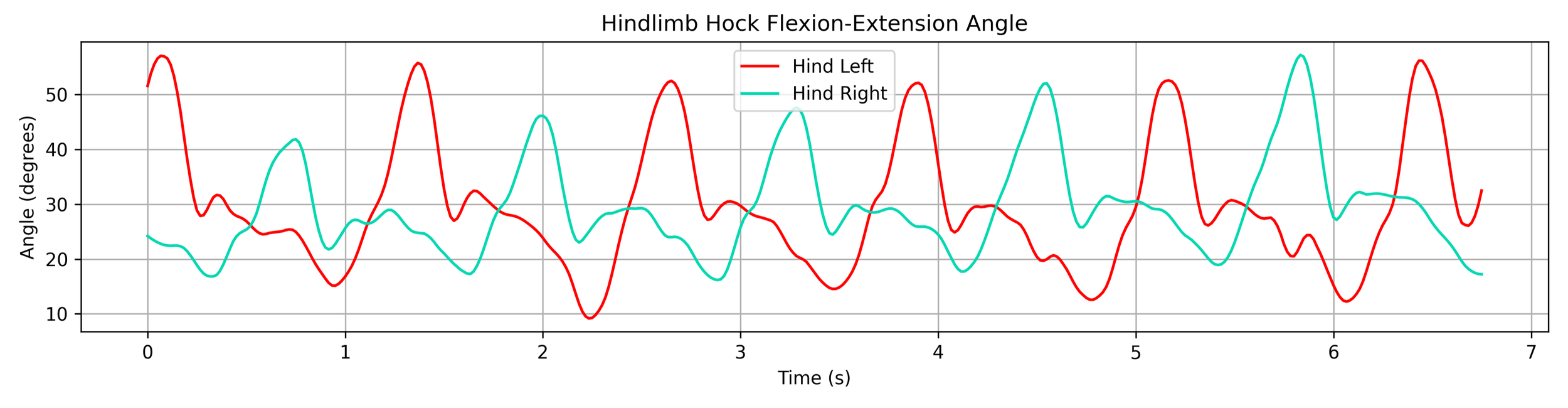
3rd December
Reports showing reduced range of motion in the right hind hock relative to the left (green lines)
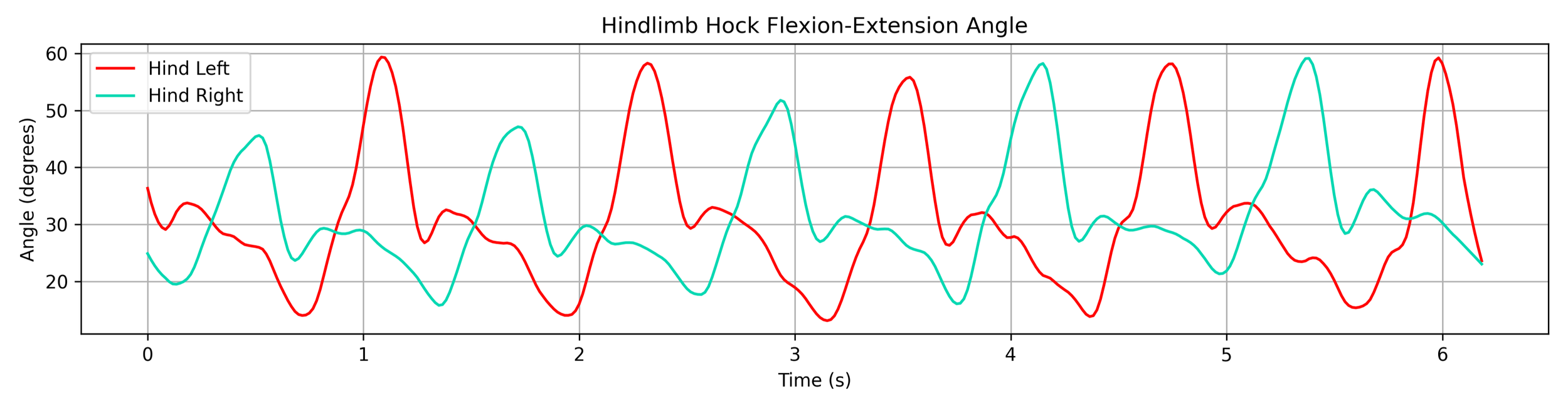
8th December
Reduced range of motion persisted in the right hind hock
Graphs illustrate consistent unilateral reduction rather than side-to-side variability.
Key Takeaway
This case highlights the value of longitudinal, yard-side monitoring. Even when a horse is still performing and most movement looks normal, repeated localised changes over time can support earlier, better-informed decisions.
TrojanTrack exists for exactly this grey area — before problems become obvious, and before they’re ridden through.
Notes for transparency
Horse and yard details have been anonymised
TrojanTrack does not diagnose injuries or disease
This case demonstrates earlier decision-making, not outcome prediction
For more information on this case, contact stephen@trojantrack.ie